

Articles and Trivia
Write an articleNavigating Mental Health Resources on Campus
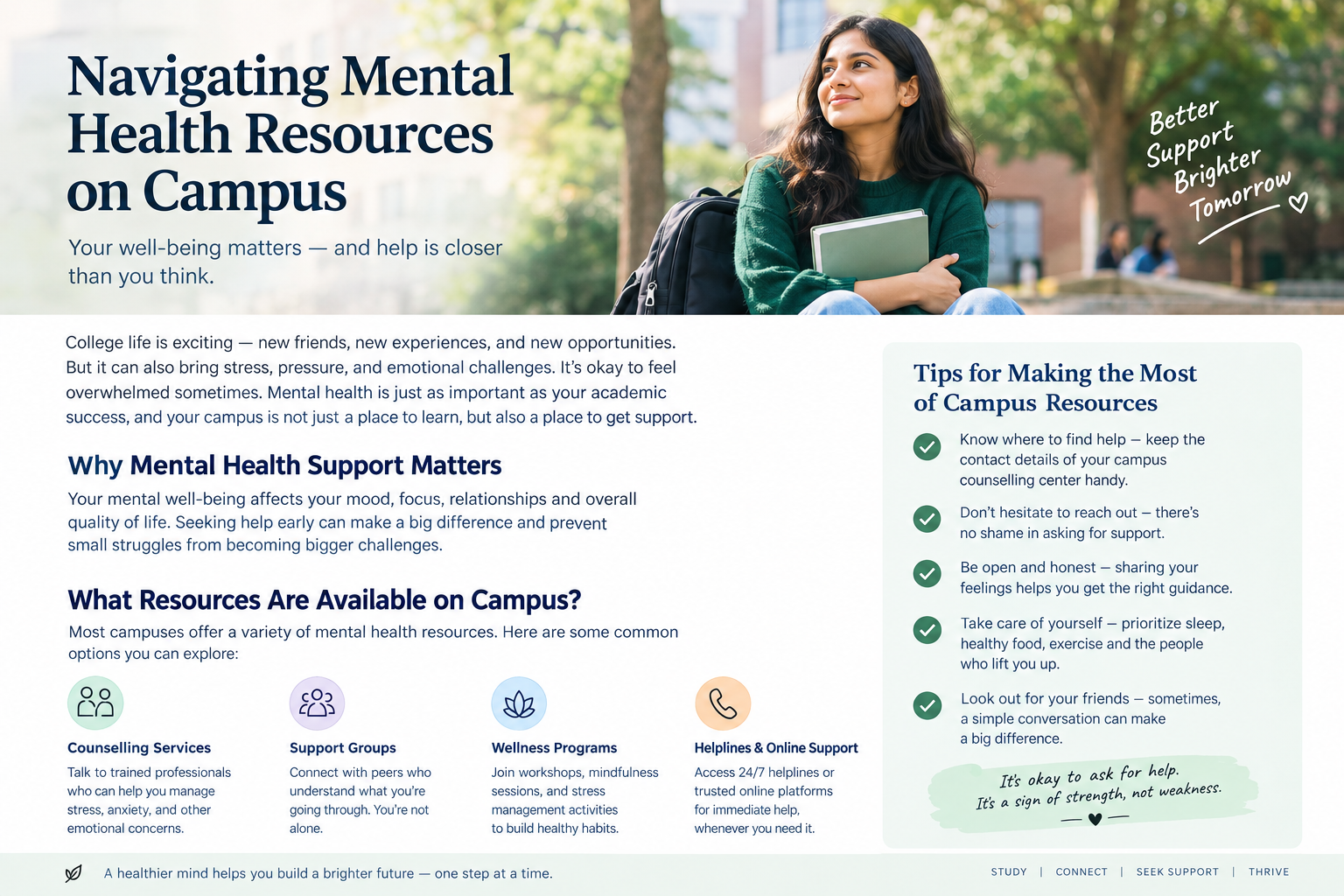
College life is an exciting journey filled with learning, new friendships, and opportunities for personal growth. However, academic pressure, examinations, financial concerns, social expectations, and uncertainty about the future can sometimes affect students' mental well-being. Recognizing these challenges and knowing where to seek support are essential steps toward a healthier campus experience.
Why Mental Health Matters
Mental health plays a significant role in how students think, feel, learn, and interact with others. Stress, anxiety, loneliness, and emotional exhaustion can affect academic performance and everyday life. Seeking support early can help students develop healthy coping strategies, build resilience, and feel more confident in managing challenges.
Taking care of mental health is not a sign of weakness. It is an important part of overall well-being.
Understanding Mental Health Resources on Campus
Colleges and universities can provide several resources to help students manage emotional and psychological challenges.
1. Campus Counselling Services
Professional counsellors can offer a confidential and supportive environment where students can discuss academic stress, personal concerns, anxiety, and other emotional difficulties. Students can contact their institution's counselling centre to learn about appointments and available services.
2. Peer Support Groups
Connecting with fellow students can help individuals feel understood and less isolated. Peer support groups encourage students to share experiences, exchange coping strategies, and build meaningful connections.
3. Wellness Programmes and Workshops
Many institutions organize mindfulness sessions, stress-management workshops, yoga classes, and wellness activities. Participating in these programmes can help students develop healthier routines and manage everyday pressures.
4. Online Resources and Helplines
Students who need additional support can explore trusted mental health platforms and professional helplines. These services can provide guidance when in-person assistance is unavailable. Students should verify the service's availability and confidentiality policies before sharing personal information.
How Students Can Seek Help
Taking the first step toward support can feel difficult, but it does not have to be complicated.
-
Contact your college's student affairs office or counselling centre.
-
Speak with a trusted faculty member, mentor, or friend.
-
Ask about appointment procedures, confidentiality, and any associated costs.
-
Maintain healthy habits, including regular sleep, balanced meals, physical activity, and breaks from academic work.
-
Reach out early if stress or emotional difficulties begin affecting daily life.
Students should remember that asking for help is a positive step toward finding solutions.
The Role of Educational Institutions
Educational institutions have an important responsibility to create safe, inclusive, and supportive learning environments. They can strengthen student well-being by providing accessible counselling, conducting mental health awareness programmes, training faculty to recognize signs of distress, and establishing clear procedures for seeking assistance.
Reducing stigma around mental health is equally important. When students feel comfortable discussing their concerns without fear of judgment, they are more likely to seek help when they need it.
Breaking the Stigma Around Mental Health
Mental health challenges can affect anyone, regardless of academic performance, background, or personal circumstances. Open conversations, supportive friendships, and awareness initiatives can help create a culture in which students feel heard and respected.
Every student deserves the opportunity to learn and grow in an environment that values emotional well-being alongside academic achievement.
Conclusion
Navigating mental health resources on campus begins with understanding that support is available and that no student has to face every challenge alone. By using counselling services, connecting with peers, participating in wellness programmes, and seeking guidance when needed, students can take meaningful steps toward a healthier and more balanced college experience.
Remember: Your mental health matters. Reaching out for support is a sign of strength, and taking care of yourself is an essential part of your journey toward success.