

Articles and Trivia
Write an articleExam & Study Tips: Time Management, Focus Techniques, and University Library Digital Archives
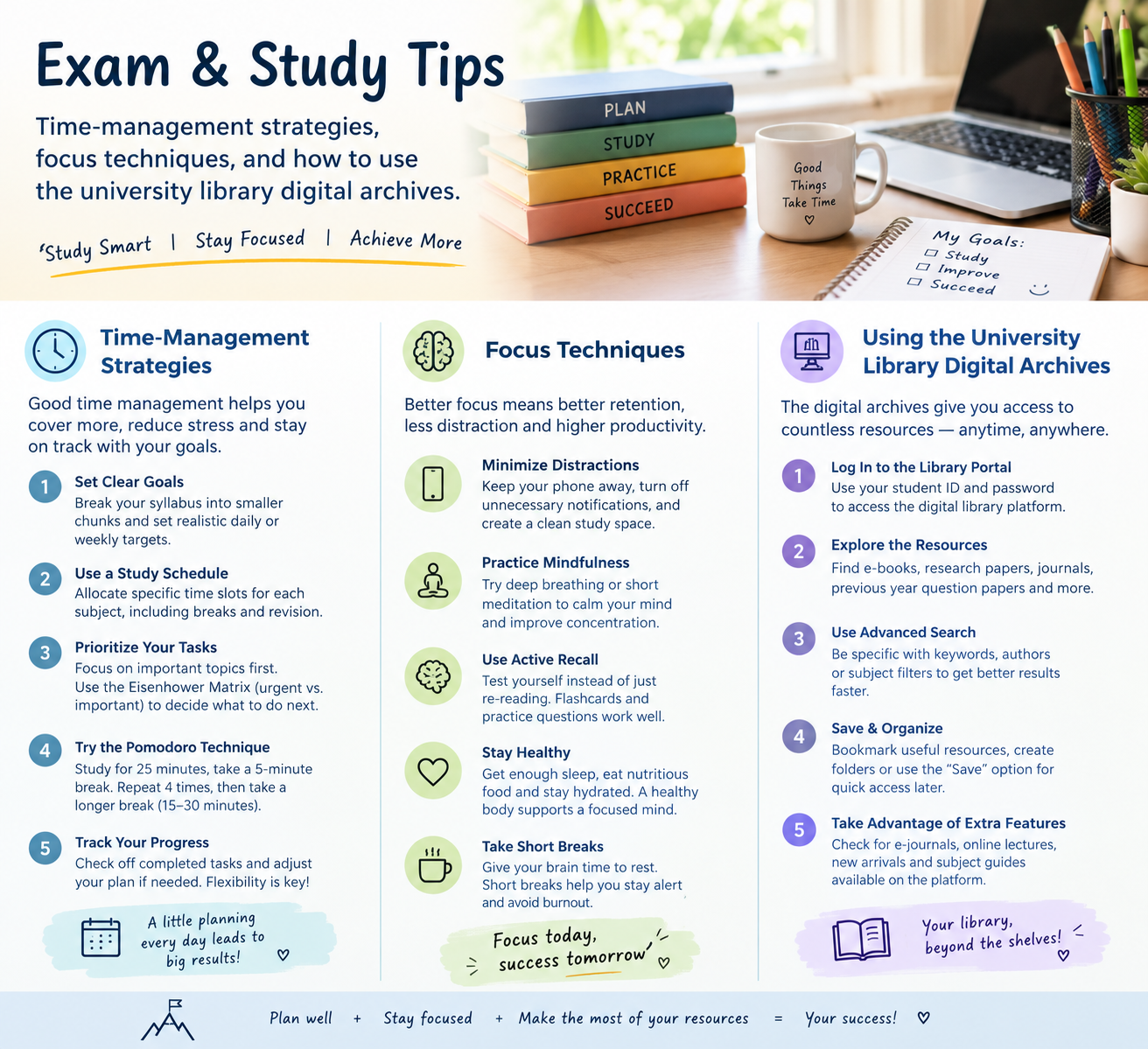
Examinations are an important part of university life, but preparing for them can sometimes feel stressful and overwhelming. With proper planning, effective study techniques, and the right use of academic resources, students can improve their performance and build confidence. Studying smart is not about spending endless hours with books; it is about using time wisely, staying focused, and learning effectively.
1. Master the Art of Time Management
Time management is one of the most important skills for academic success. Students often struggle to balance lectures, assignments, revision, and personal responsibilities. Creating a realistic study schedule can make this process easier.
Start by dividing the syllabus into smaller topics and setting daily or weekly goals. Prioritize difficult and important subjects, and allocate sufficient time for revision. Techniques such as the Pomodoro Technique, which involves studying for 25 minutes followed by a five-minute break, can help maintain concentration and prevent mental fatigue.
Students should also avoid leaving everything until the last minute. Regular revision and consistent preparation reduce exam stress and provide more time to clarify doubts. Remember to include breaks, adequate sleep, and leisure activities in your routine to maintain a healthy balance.
2. Improve Focus with Effective Study Techniques
Concentration plays a vital role in understanding and remembering information. A quiet, organized study environment can help students minimize distractions and improve productivity. Keeping mobile phones away, turning off unnecessary notifications, and setting specific study goals are simple but effective steps.
Active learning techniques can make studying more productive. Instead of repeatedly reading the same material, students can use flashcards, practice questions, mind maps, and self-testing to strengthen their understanding. Explaining a concept in their own words is another useful way to identify gaps in knowledge.
Mindfulness, deep breathing, and short breaks can also help refresh the mind. Maintaining healthy eating habits, drinking enough water, and getting sufficient sleep support memory and concentration. Most importantly, students should identify the study methods that work best for them and follow a consistent routine.
3. Make the Most of University Library Digital Archives
University libraries offer more than printed books and physical study spaces. Their digital archives and online databases provide access to a wide range of academic resources, including e-books, research papers, scholarly journals, dissertations, previous examination papers, and reference materials.
Students can begin by logging in to their university library portal using their student credentials. They should explore available databases, digital collections, and subject-specific resources relevant to their courses.
Using advanced search options and specific keywords can help students find reliable information more quickly. Filters such as publication date, author, subject, and document type can narrow the results. Saving useful resources, organizing references, and keeping track of citations can make assignments and research projects easier to manage.
Students should also verify the credibility of their sources and follow the university's rules for accessing and using digital materials. If they experience difficulties, librarians can provide valuable guidance on database searches, academic references, and research tools.
4. Develop Consistent Study Habits
Academic success is usually the result of consistent effort rather than last-minute preparation. Setting achievable goals, tracking progress, revising regularly, and seeking help when needed can make a significant difference.
Students should remember that everyone learns at a different pace. Comparing progress with others can create unnecessary pressure. Instead, focus on personal improvement, celebrate small achievements, and learn from mistakes.
Conclusion
Effective exam preparation requires a combination of time management, concentration, and smart use of academic resources. By creating a realistic study schedule, adopting active learning techniques, and exploring university library digital archives, students can make their preparation more organized and productive.
With consistency, discipline, and the right resources, examinations can become less stressful and more manageable. Plan well, stay focused, and make the most of every learning opportunity to achieve academic success.